Pachyderms: what are they?
Pachyderms are mammals with thick skin. Elephants, Rhinoceroses, and Hippos are generally considered to belong to this group. It used to be thought that all pachyderms formed a single biological order. This idea was primarily based on similarities observed in body structure, as evidenced by the following beautiful description I found in the Dutch Winkler Prins Encyclopedia from 1870:
Dikhuidigen noemt men eene orde van zoogdieren, die zich door een plompen ligchaamsbouw, eene dikke, ruwe. dikwijls gescheurde en met borstels bedekte huid, en een aantal in den hoef ingehechte teenen onderscheidt. Daartoe behooren de grootste landdieren, zooals het nijlpaard, de neushoorn en de olifant, voorts in Europa alleen het zwijn.
De romp is doorgaans geweldig dik, de buik hangt zoo laag, dat hij bijna den grond aanraakt, de beenen zijn kort en dik en gelijken op zuilen; deze dieren bewegen zich met moeite en zijn doorgaans traag; maar als zij getergd worden, kent hunne woede geene grenzen. Hunne tanden zijn verschillend. Zij zijn plantenetende schepselen en wentelen zich gaarne in vochtig slijk.
A brilliant old-fashioned description, but one that holds little scientific weight. More modern scientific research shows that the various pachyderms should be classified into separate orders.
Elephants: the most distinctive of the pachyderms
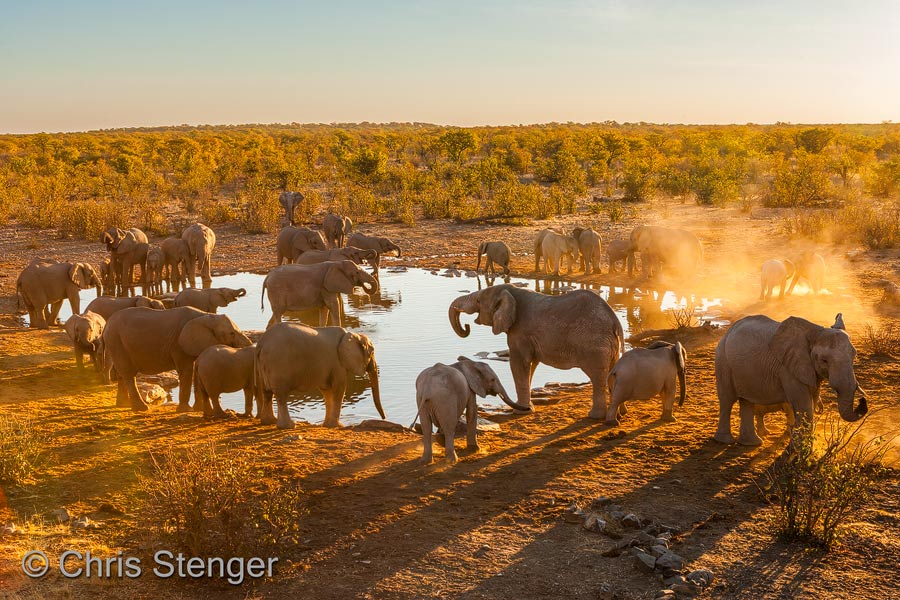
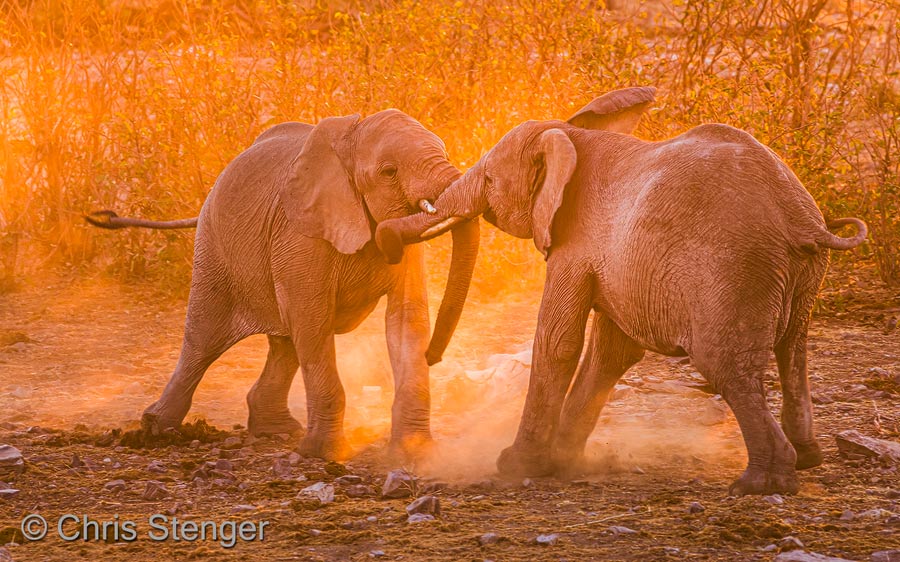
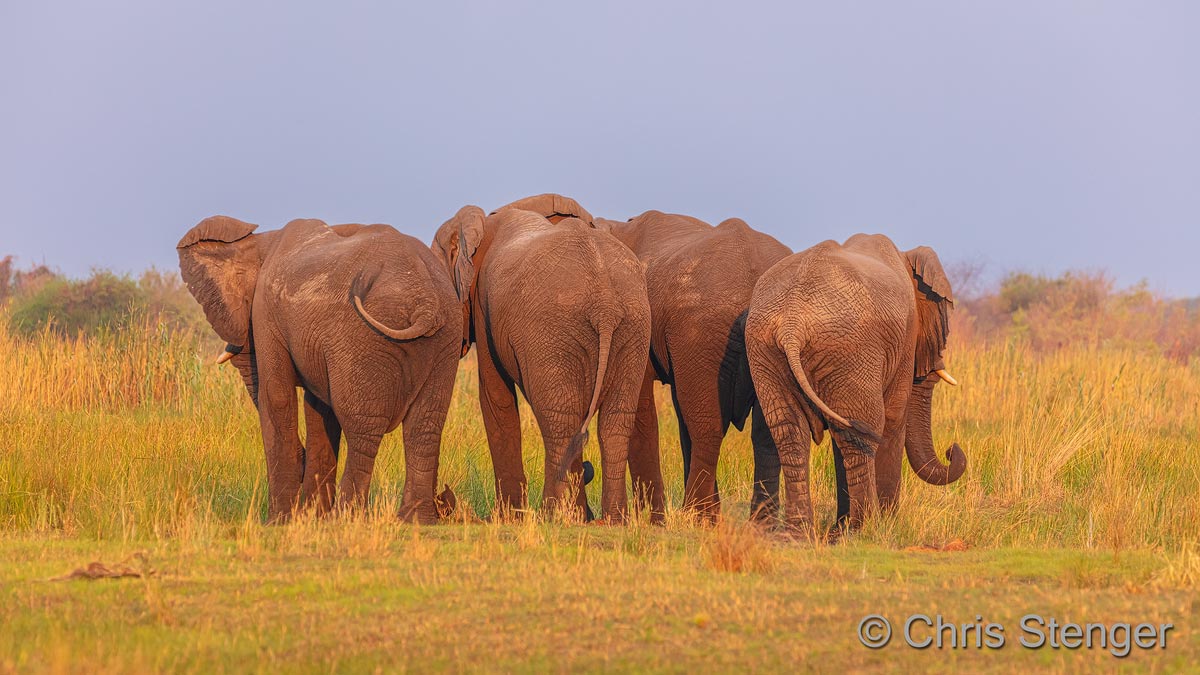
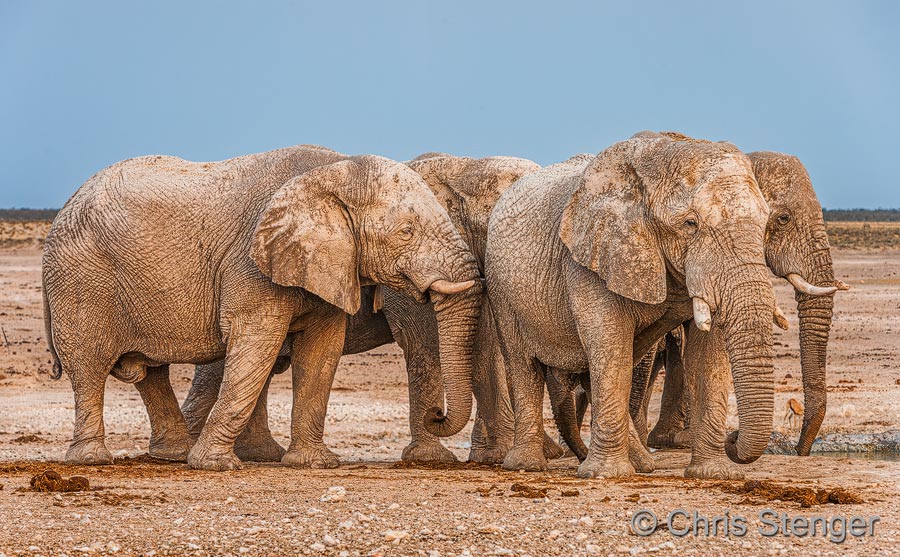
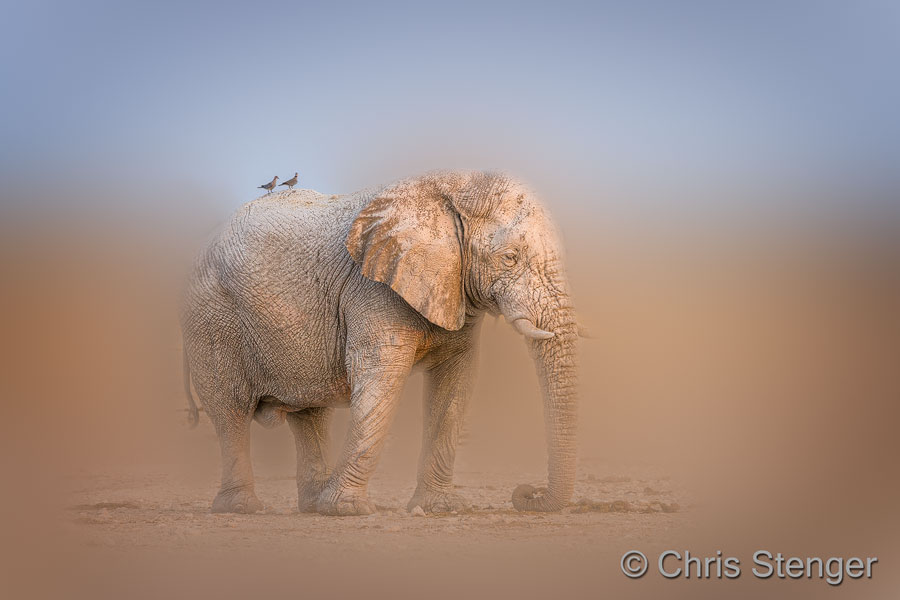
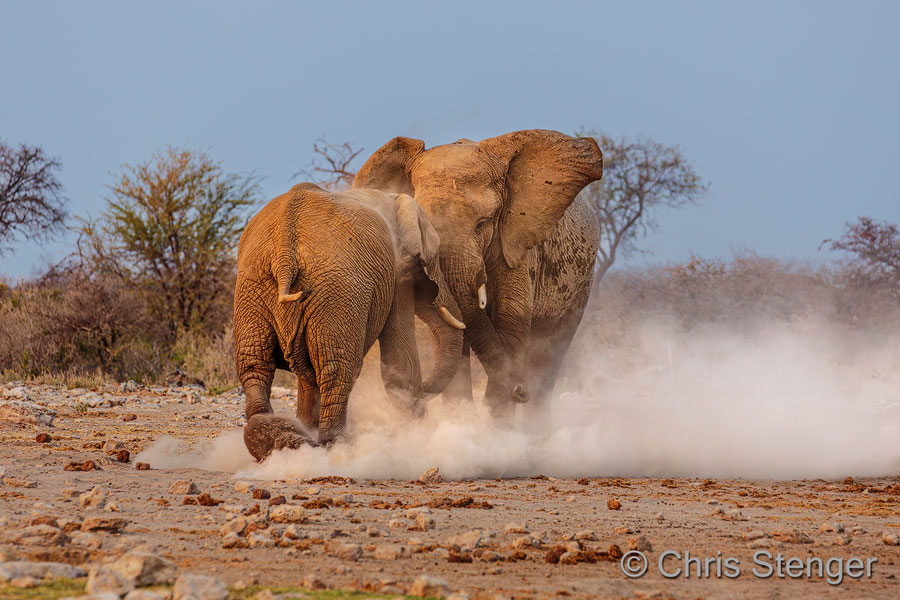
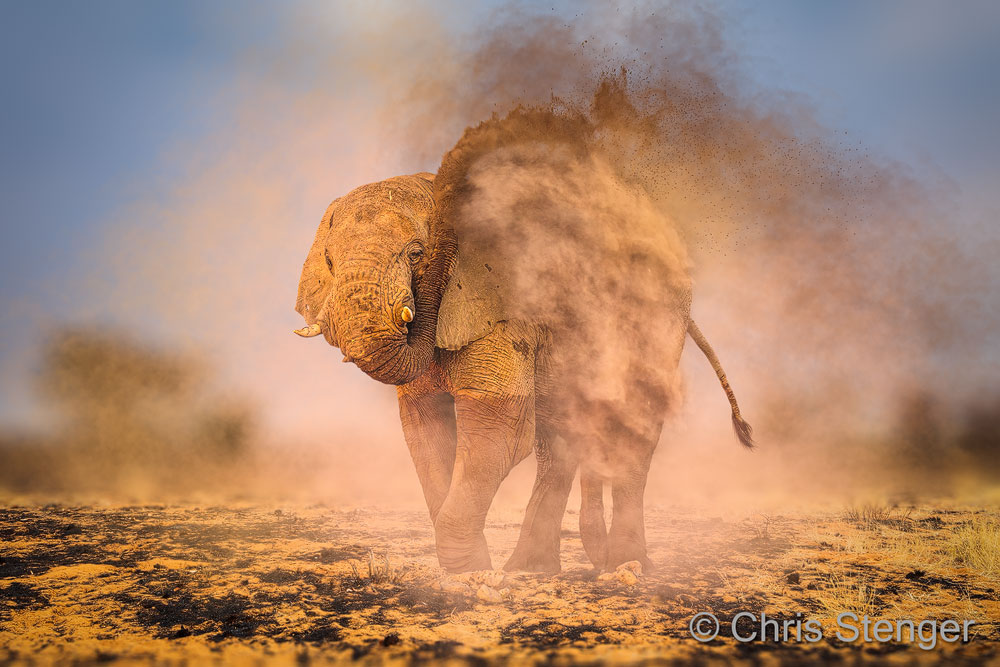
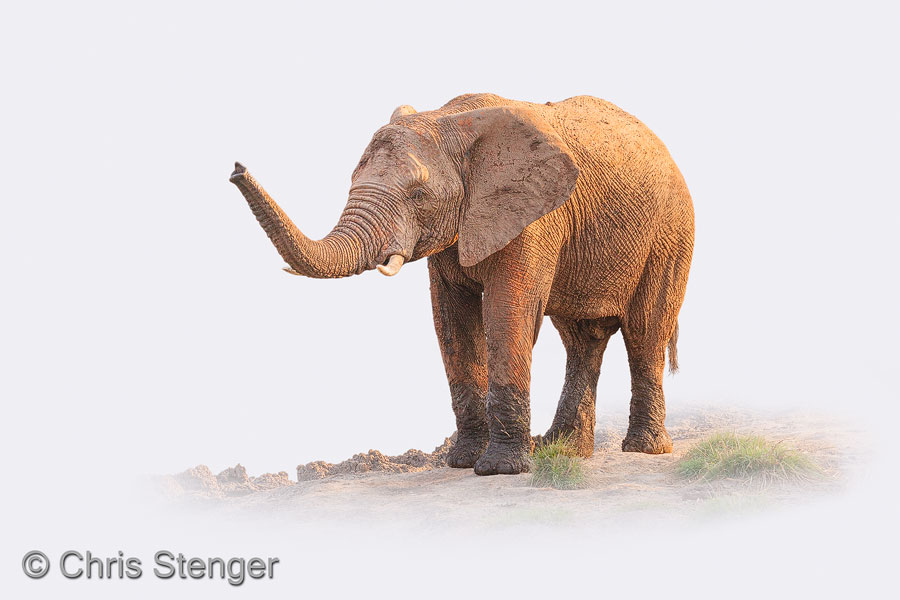
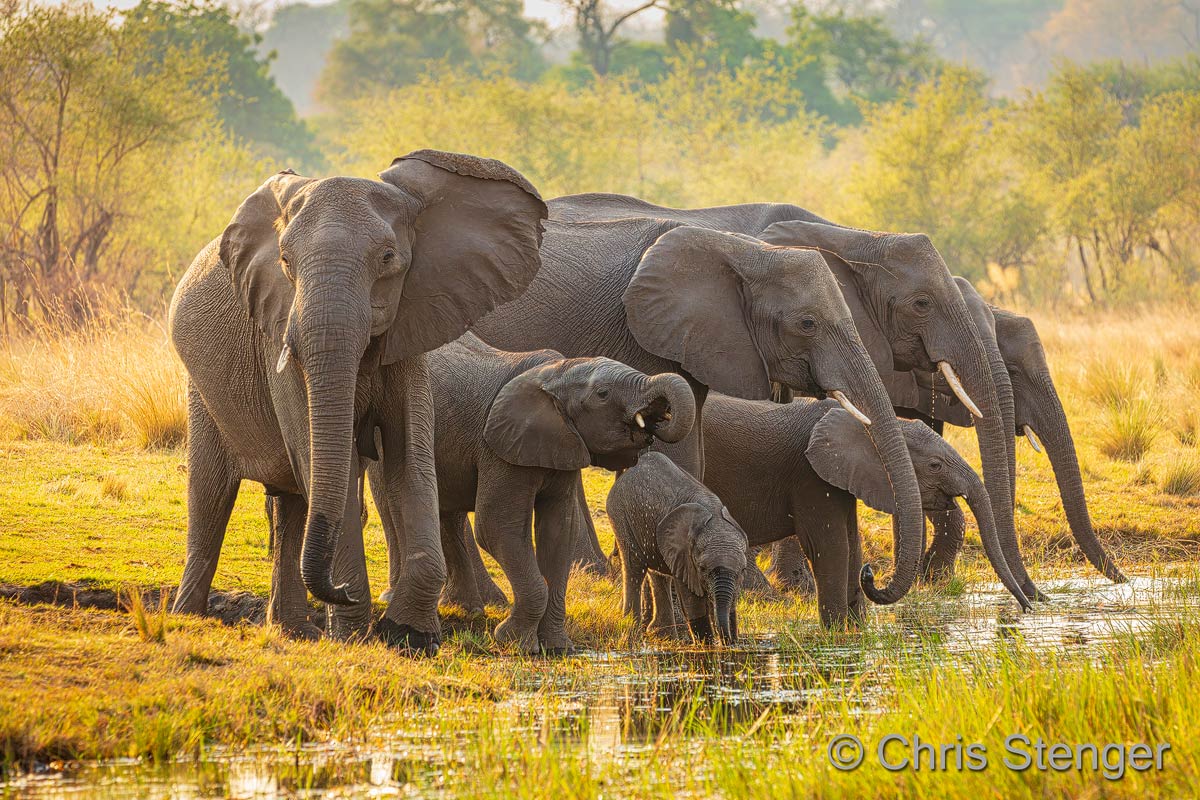
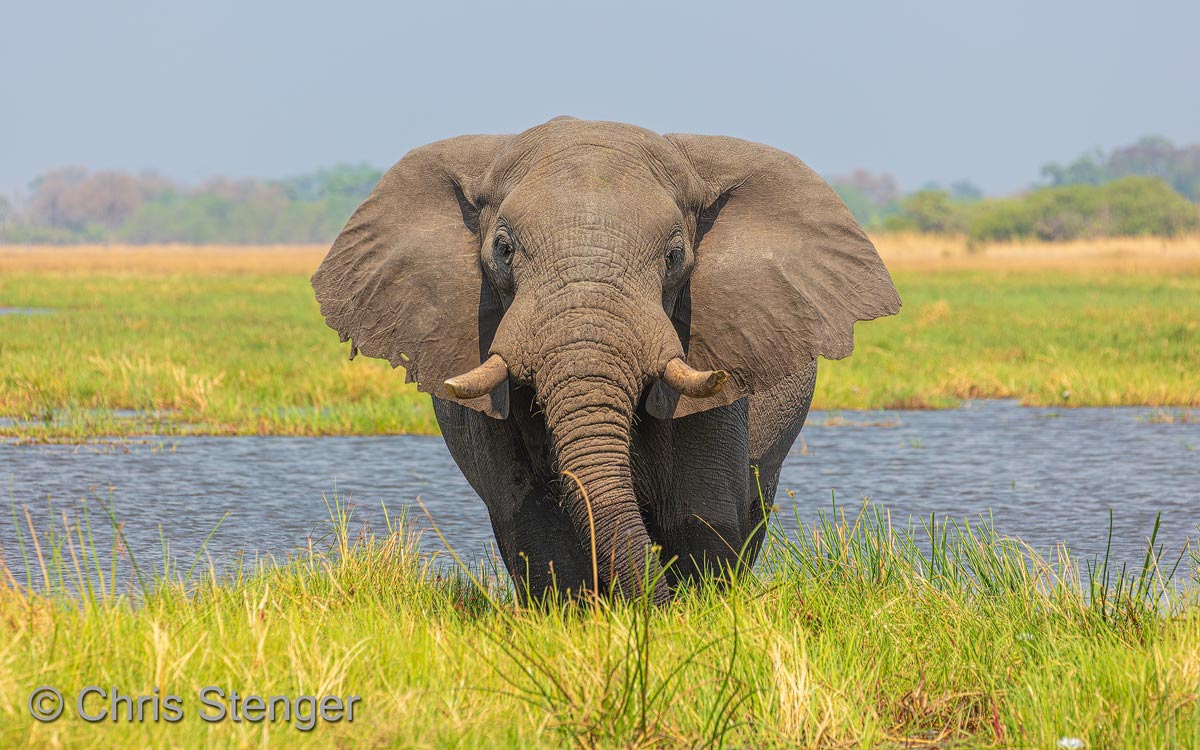
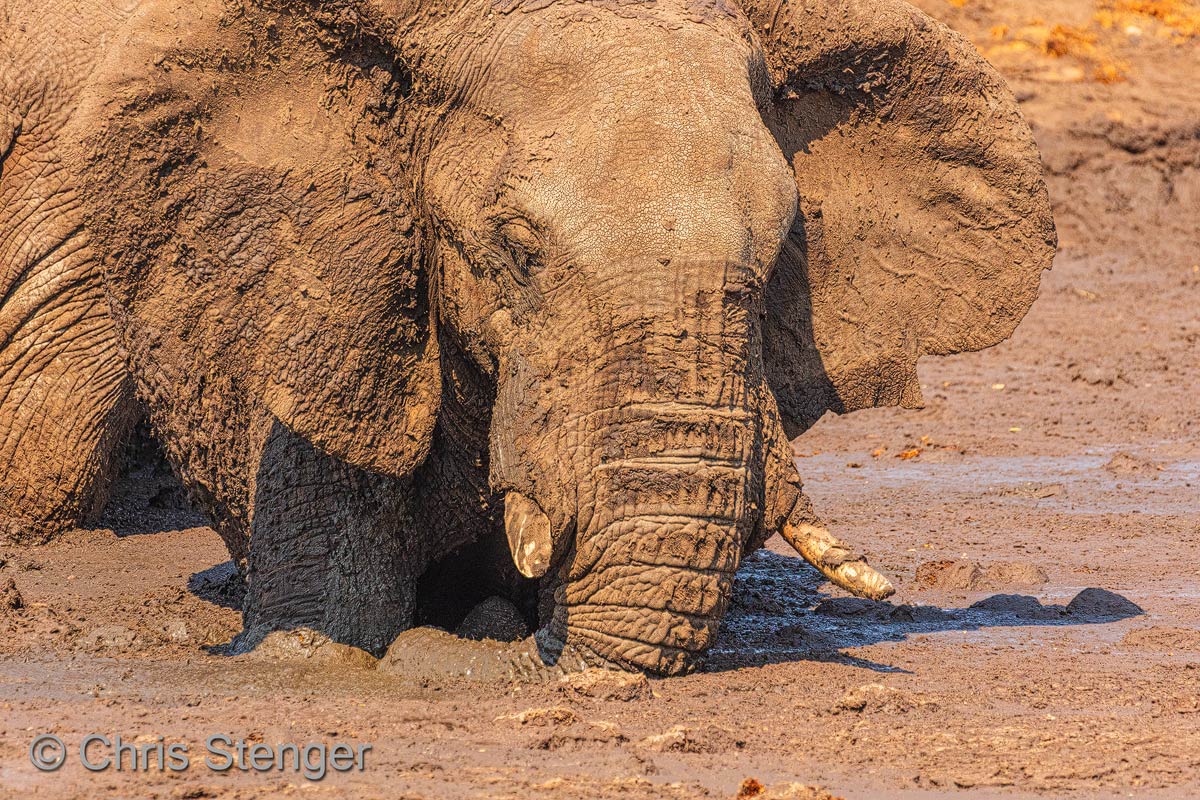
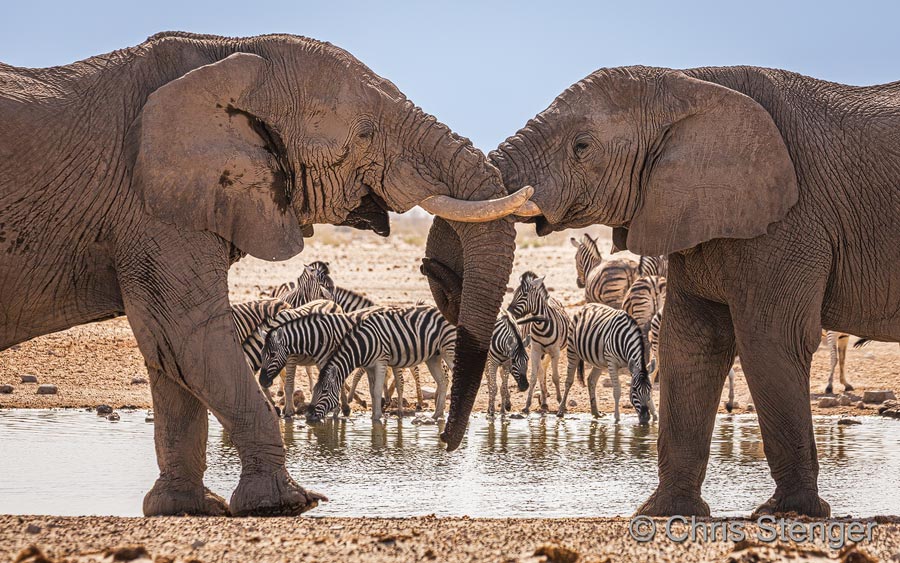
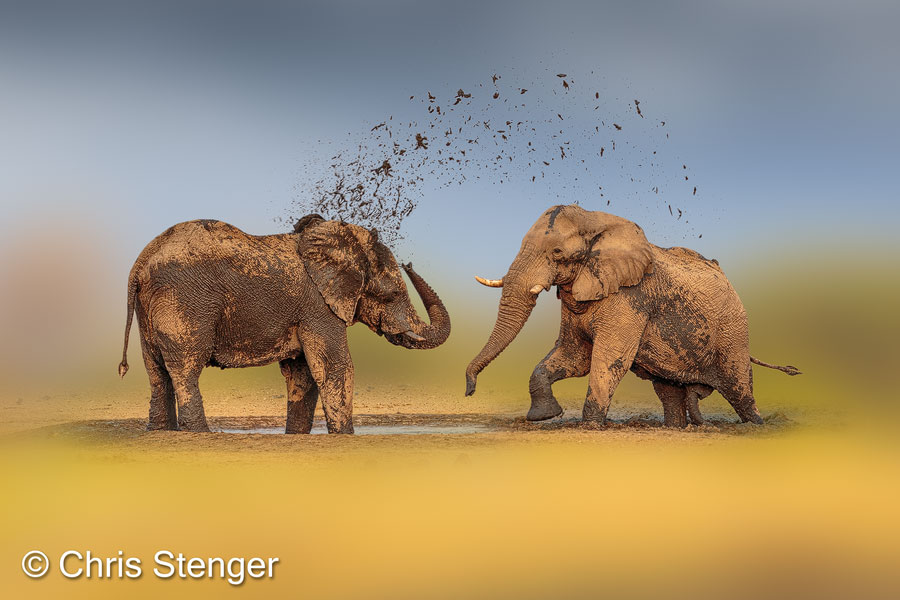
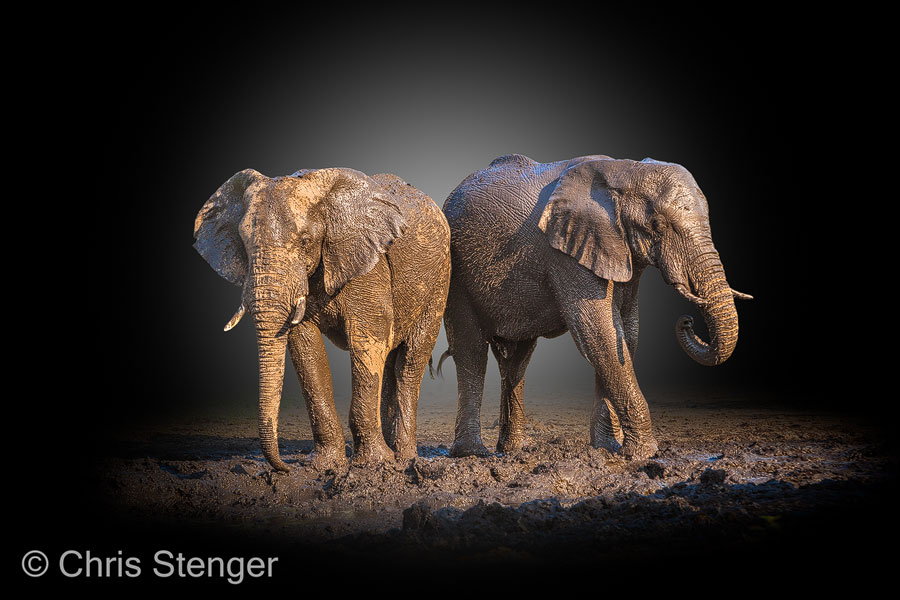
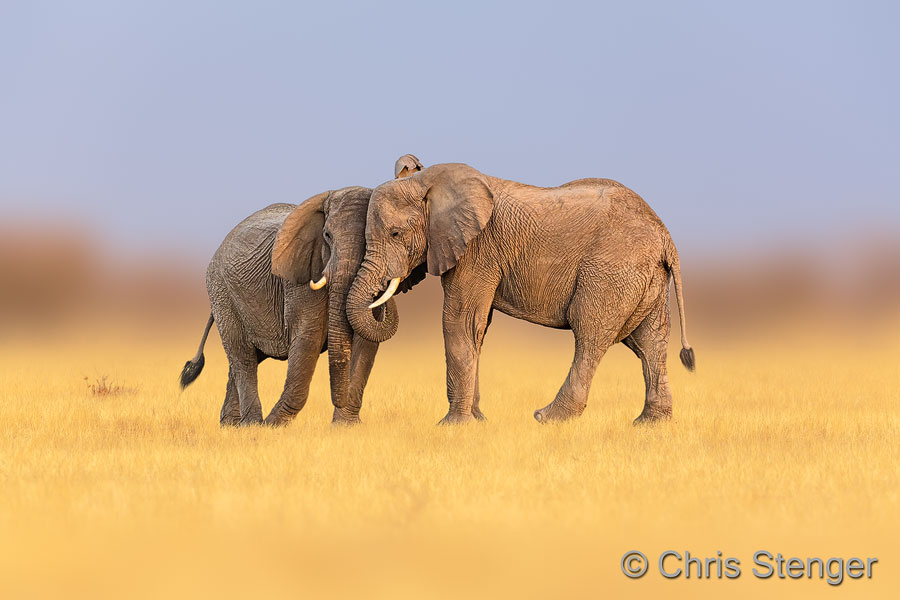
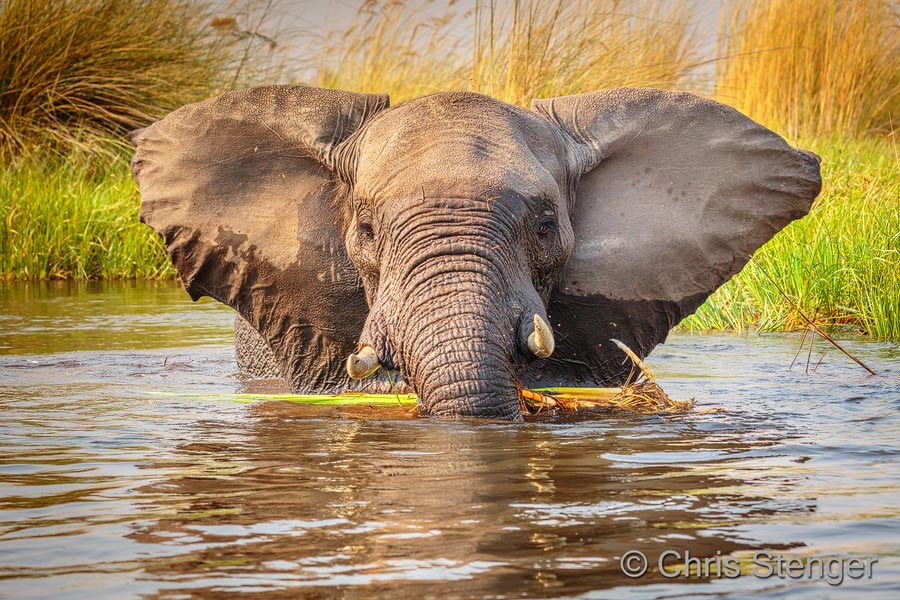
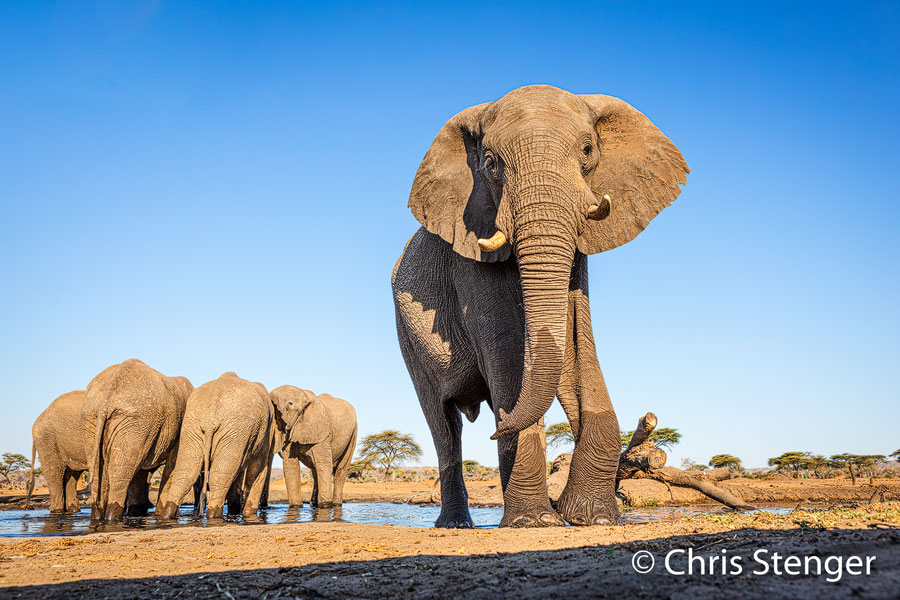
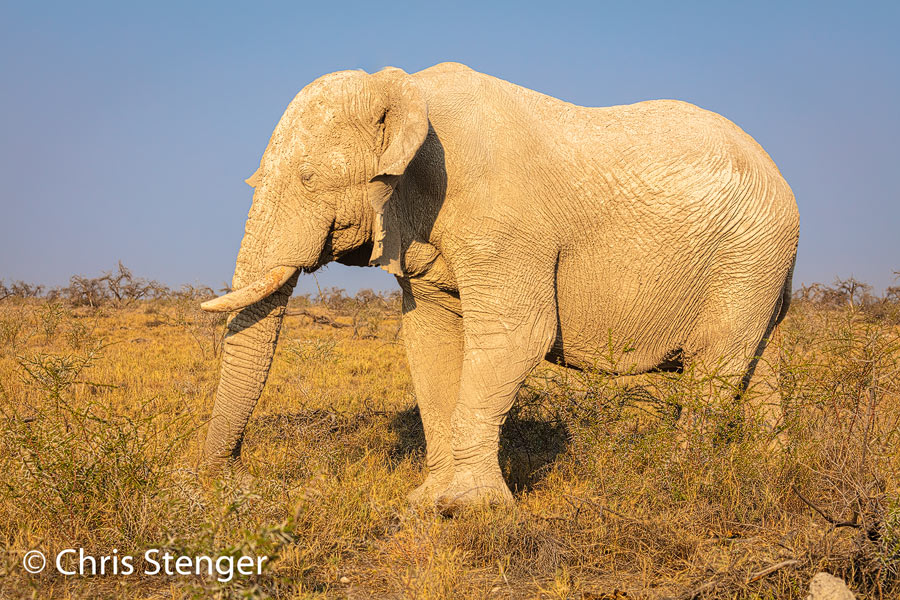
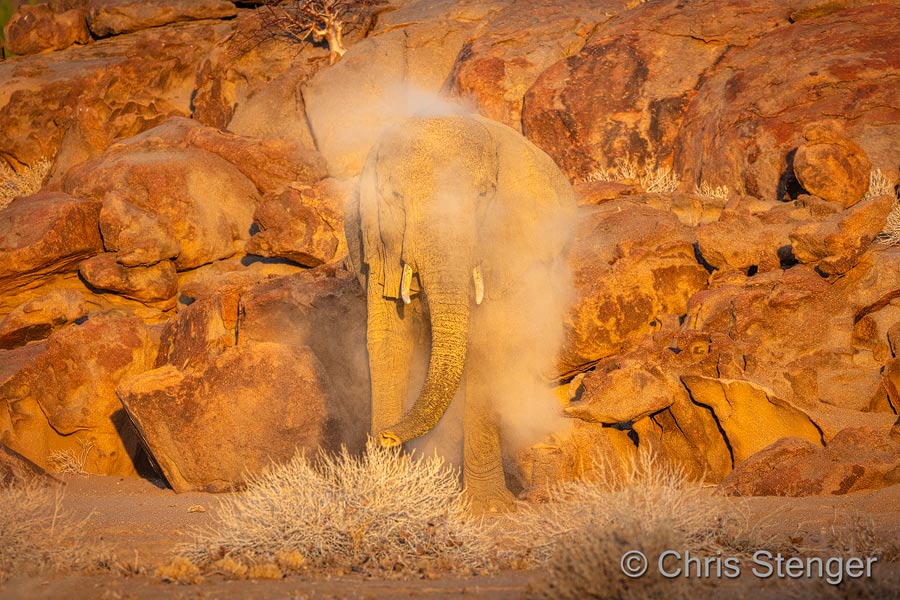
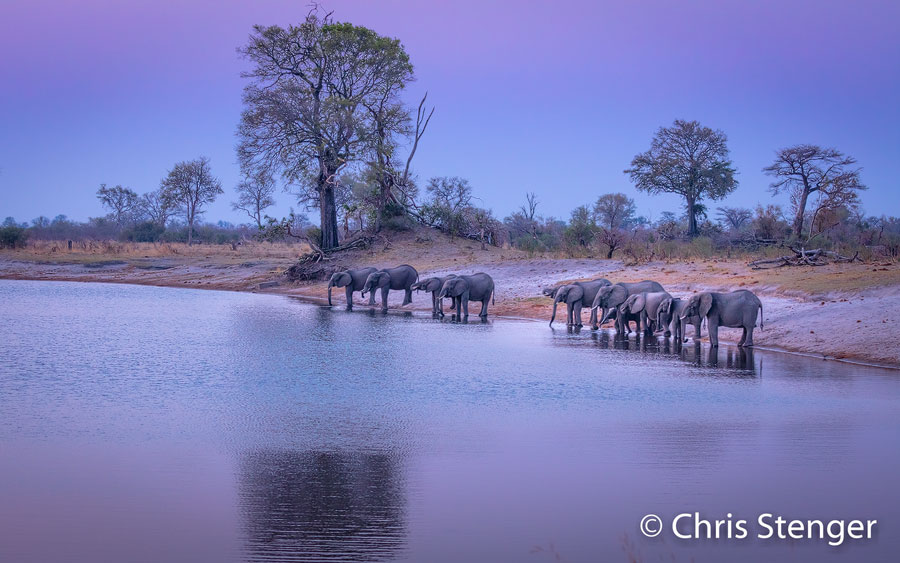
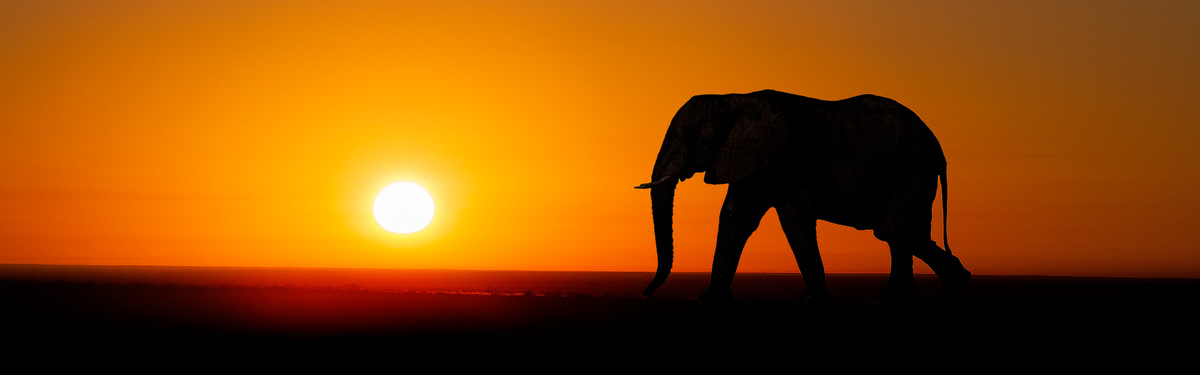
In my opinion Elephants are the most fascinating pachyderms. They are exceptionally intelligent animals that are active during the day. They are also group animals with highly developed social behavior. With an elephant herd nearby, there’s always something going on. As a photographer, I’m never bored when I spend hours observing and photographing elephants.
South Africa, Namibia, and Botswana are true elephant countries. In fact, in many places in these countries there are too many elephants. With all the stories about elephant poaching for ivory, this sounds contradictory, but it is a reality. Firstly, the elephants’ tusks in southern Africa don’t grow as large, probably making them somewhat less attractive to poachers. Furthermore, the available food supply in the local desert climate is limited. This quickly leads to overpopulation in the reserves where they are protected. Therefore, without the public being aware of it, elephants are regularly culled in Kruger National Park in South Africa to maintain a healthy population. In Namibia, too, a culling campaign was held many years ago in the eastern section of the Etosha National Park. Recently a new culling campaign was announced by the Namibian government.
Rhinoceroses: critically Endangered
The rhino is currently highly endangered. That’s why seeing one is an absolute must for many people on safari. Yet, you can spot them relatively easily in the countries of southern Africa. I also have the impression that the number of rhinos in the large national parks has increased over the past 20 years. At least, I see more rhinos every time I return to Africa. Perhaps, rhino conservation efforts in southern Africa are quite effective.
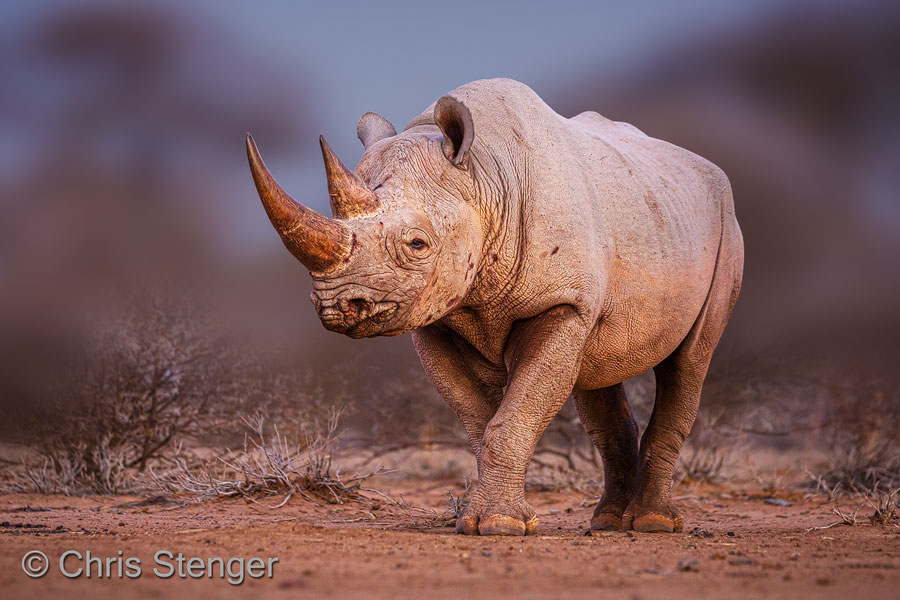
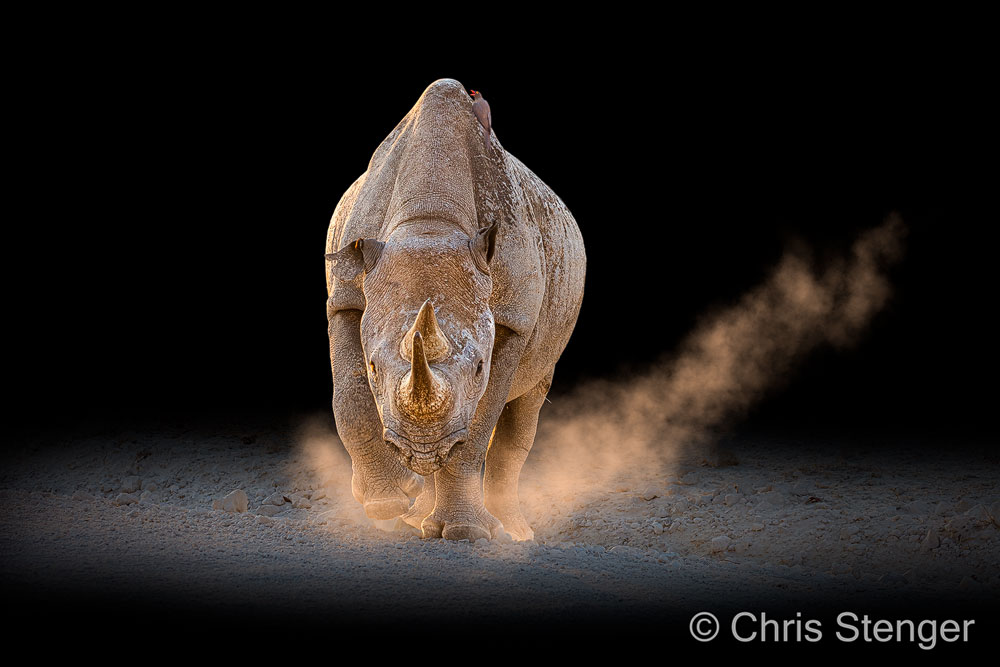
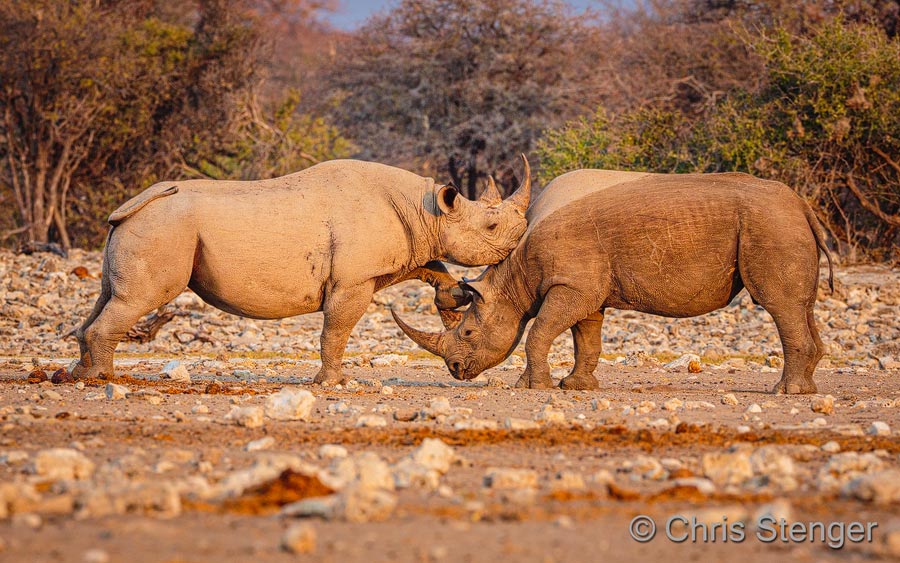
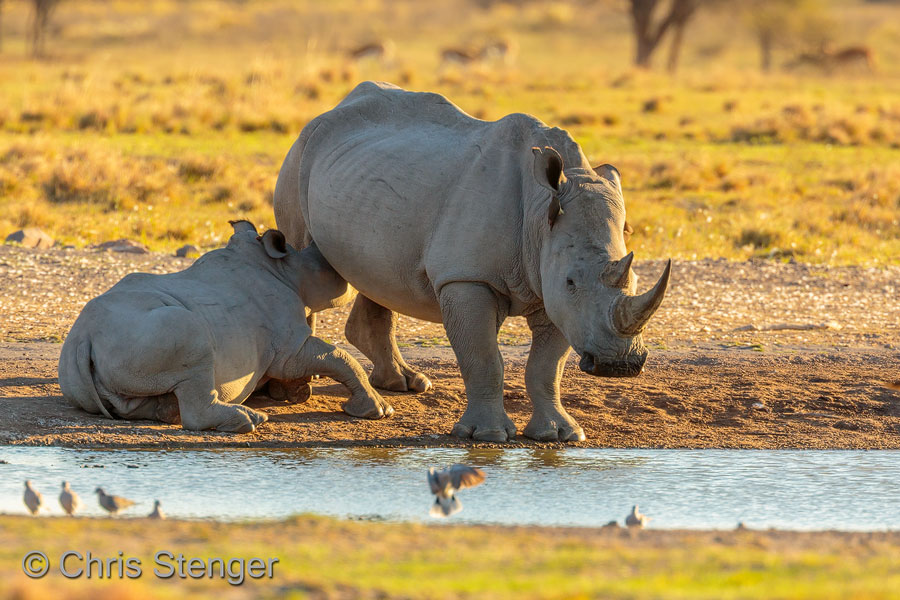
Rhinoceroses are not so interesting for photographers. They are solitary animals that usually graze or stand still most of the time without displaying social behavior. I’ve sometimes seen them standing still for more than an hour at a waterhole without much happening. Therefore it is often difficult to take a photo that rises above the level of a picture in a biology textbook. An exception was the fight between two male rhinos that I once witnessed in Namibia.
Hippos
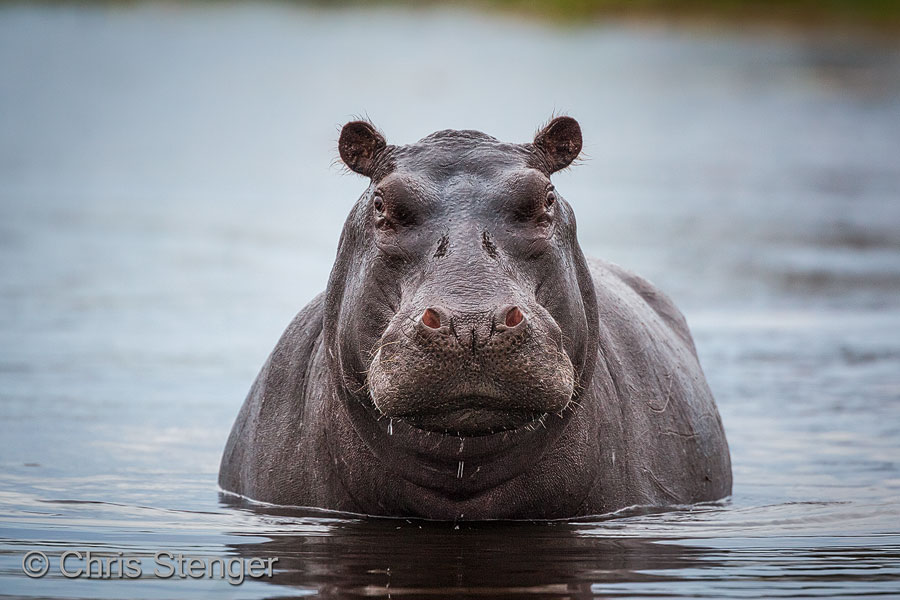
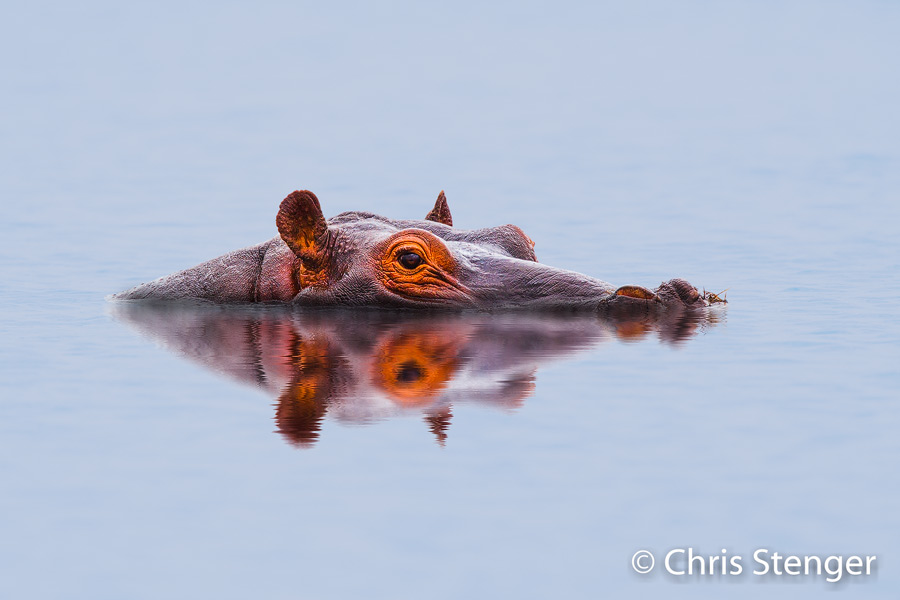
Hippos can be found anywhere in Africa where there’s permanent water. Like rhinoceroses, hippos aren’t always very interesting for a photographer. During the day, they usually lie in the water without showing much activity. In the evening, they emerge from the water to graze. The males display a very characteristic territorial behavior. They yawn to impress other males with their enormous open mouths.