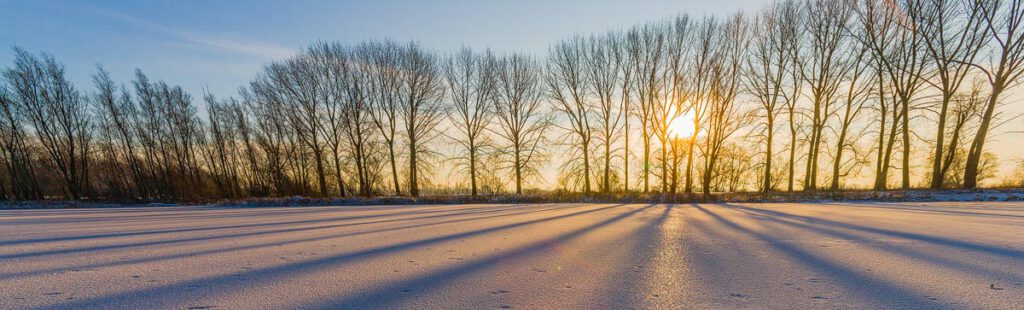
Nature Photographer – Chris Stenger
I started with photography in the 1960s, when I was studying chemistry in Leiden. After eight weeks of conveyor-belt work at the Caballero cigarette factory in The Hague, I could buy my first camera; a Minolta SRT101 SLR. The camera is now in my private museum of sweet memories, but it still works! In those long-gone years, I experimented enthusiastically with all kinds of black-and-white techniques such as pseudo-solarization, gum printing, (brom)oil printing and so on. In today’s digital age, these techniques have sunk deeply into analog oblivion and few photographers still master these techniques.
After this experimental early period, I started working with color slides. From then on, I also increasingly focused on nature photography (animals and landscapes) and travel photography. These are still my favorite subjects today.
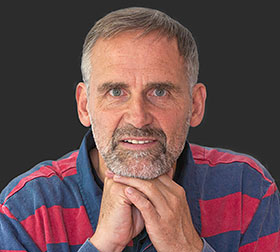
Family and working life
Family, children and a busy job at Shell Research pushed photography somewhat to the background, especially in the 1980s. However, the passion remained, and once the children had left home, I started working part-time. This created the opportunity to spend more time on photography. I retired from Shell in 2010.
A contemplative nature photographer
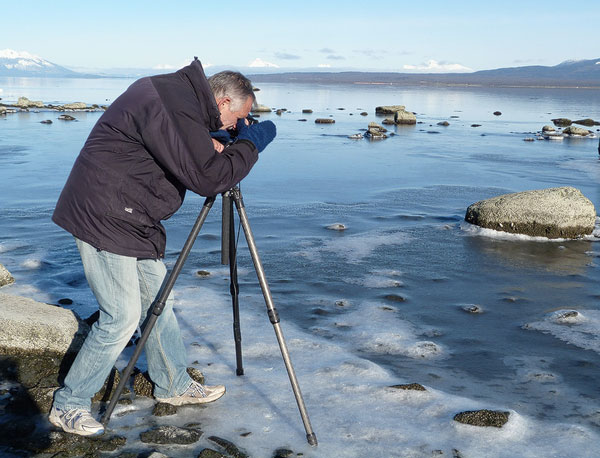
I consider myself a contemplative photographer. I work quietly and enjoy spending hours or days on a single subject. Curiosity, dedication, and technical perfection are key.
Besides the actual photography itself, I also find post-production image editing extremely important. Nature photographers, in particular, often feel that the image should be completely created in-camera. In this view, post-production image editing should be limited to minor adjustments, e.g. dust removal etc. However, when it comes to image editing, I’m not a traditional nature photographer. For me the editing phase is very important as well, and anything goes to achieve the best possible and beautiful result. One condition though: you have to be honest about what you’ve done. Therefore I can enjoy both a straightforward image of a wild animal but also a landscape that has been heavily edited and modified in Photoshop. The end result and the feeling I get from it are decisive!
What about AI?
Like many other photographers, I’m ambivalent about Artificial Intelligence. On the one hand, I know that AI in photography and video is unstoppable. I also appreciate the enormous possibilities AI may offer in image editing. On the other hand, I wonder what I’m still doing as a photographer if someone can create a beautiful image at a computer without ever taking a photo.
For me, the answer is quite simple: I take photos because I love to be outside in nature and capturing things I’ve experienced myself: grand landscapes, impressive animals, and fascinating cultures. If someone wants to create that in a studio, fine…’be my guest,’ but nothing beats the feeling of being there and creating photographs. Moreover, once I’m home, I also enjoy creating fantasy worlds using tools like Photoshop. For me, it’s also crucial that I exclusively use my own photos when creating such fantasy worlds. Although I sometimes experiment with AI, just to see what the current status is, all images on this website and in my shops were generated by myself without the use of Artificial Intelligence!
Equipment
I work primarily with Canon equipment. I use small, handy Panasonic micro 4/3 cameras as well. For several years I photographed with a Mamiya medium-format system with a Leaf digital back. The image quality is fantastic, but such a medium-format system is heavy and often very cumbersome to use or travel with. Moreover, the quality of images from modern 35mm cameras approaches that of my medium-format camera. I had to make very large prints to see a noticeable difference. That’s why I said goodbye to digital medium format in 2020.
Especially in recent years, I’ve also started capturing more and more video. The video quality of my Canon and Panasonic cameras is fantastic and that has led to a clear shift from exclusively stills to more and more video. I used to make stills first, and once I’d taken enough photos, I asked myself whether I should shoot a video as well. These days, however, I always consider how to best capture a subject: video or stills. Especially with moving subjects, I often choose to shoot a video first, and then perhaps a photograph later on. What also helps is the fact that video quality in modern camera’s is good enough to take a still out of the video stream, if you didn’t have the opportunity to take a photograph.
Presentations and Photo competitions
Each year I give a number of presentations in which I show the results of my photo trips and many hours spent behind the PC to a wider audience.
I frequently participate in international photo competitions and I have won more than 250 photography awards. I’m holder of the EFIAP/d1 distinction.